

Charles Jencks

When you design a garden, it raises basic questions. What is nature, how do we fit into it, and how should we shape it where we can, both physically and visually?
Garden of Cosmic Speculation by Charles Jencks (2003) published by Frances Lincoln
Piet Oudolf

Traditionally, the way plants were organized in parks and gardens reflected a culture that liked to order and discipline nature. Contemporary planting design is not only freer, but also seeks to reflect nature. It also addresses our concerns about how we garden sustainably and in partnership with nature.
For the most part, however, unless there are clear design, practical or functional reasons for block planting, we would strongly urge gardeners and designers to do their best to move away from this outdated and unimaginative style. In private gardens it simply acts as a deterrent to developing more creative planting schemes, while in the public realm it is little more than a crutch for those in the landscape profession who have for far too long treated plants as green cement. The exception might be the dramatically big block planting, which can have real design impact, but that is another story.
The more recent tradition… is about… how to create the sensation of nature, often in urban or suburban areas. As we know all too well, this does not mean letting things go by allowing natural processes to take over.
Planting. A New Perspective by Piet Oudolf and Noel Kingsbury (2013) published by Timber Press

Piet’s plantings are meticulously thought out, but once installed require much less intervention… .
…Piet’s work focuses on the beauty of herbaceous plants after they have ‘performed’ as much as while they are still in colour. At no point in their life-cycle are they taken off-stage — the point is to relish their appearance at all stages of their growth. An Oudolf garden in winter has reached its climax, rather than undergoing an intermission.
Although the horticulture required to maintain Piet’s garden is less dynamic and demanding in the sense that his style promotes stability and as little manipulation as possible, the enhanced seasonality of his approach ushers in a new type of dynamism, where plants are allowed to do more of the work themselves.
Planting the Oudolf Gardens at Hauser & Wirth Somerset by Rory Dusoir (2019) published by Filbert Press in association with Hauser & Wirth Publishers

The naturalistic planting style is an approach that aims to make plants appear as if in their natural state.
Gardening with Grasses, by Michael King and Piet Oudolf (1998) published by Frances Lincoln
Christopher Lloyd

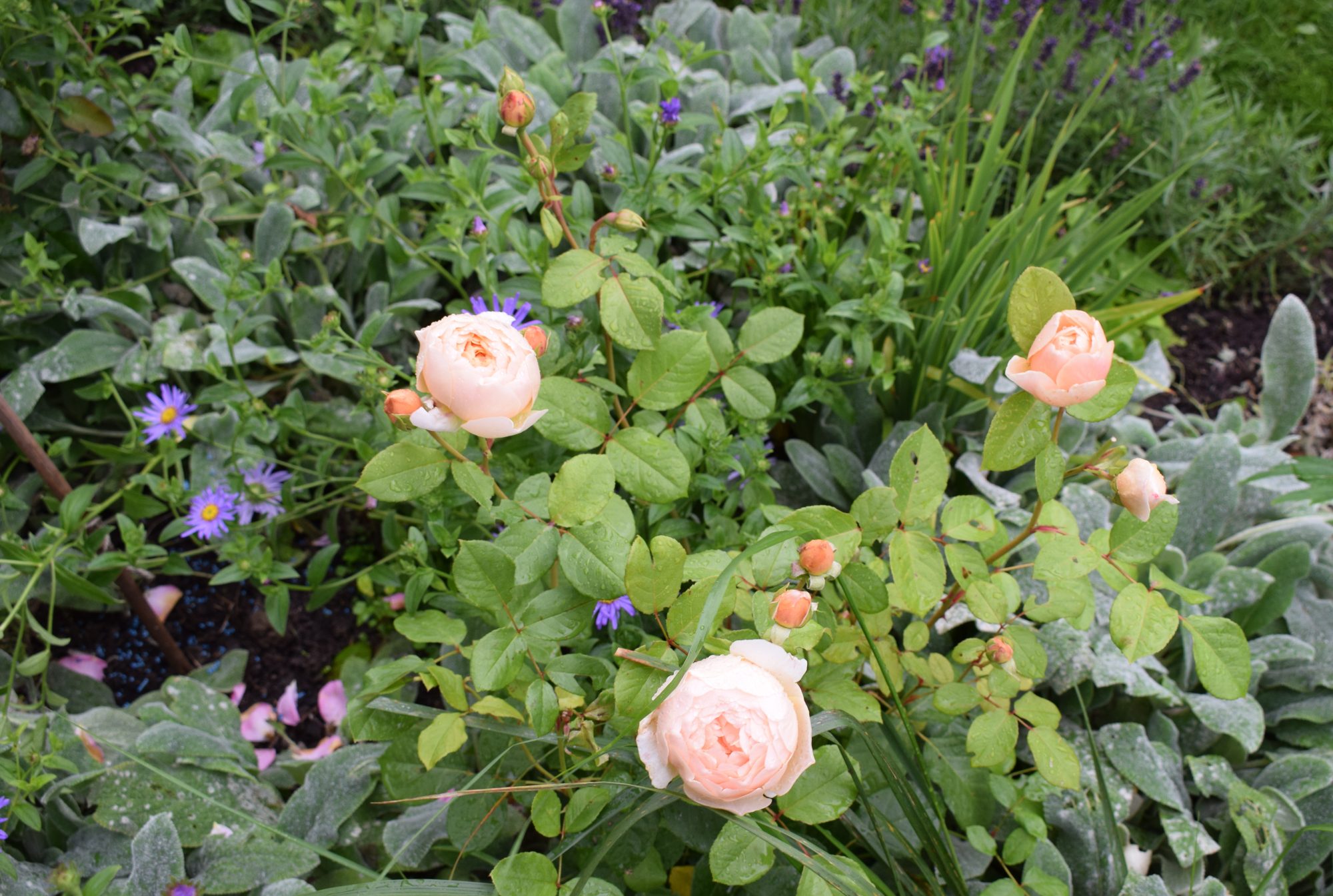
Tapestry Gardening. The best gardening, as I see it, achieves a tapestry of plants. All the units touch or intermingle and no canvas shows through.
It is the gardener’s stiff task to control his ruthless jungle without its appearing to be controlled; to guide his troupe of beautiful savages without their seeming to be guided. Neither is the guiding all in one direction, for the sensible gardener will take lessons from his plants. Their behaviour is often unexpected and unplanned and yet successful, and he must swallow his pride and allow them scope to go their unpremeditated way.
The Well-Tempered Garden by Christopher Lloyd (2014, originally 1970) published by Weidenfeld & Nicolson
You must be logged in to post a comment.